あいまい母音schwaシュワ
会話が続く! リアル旅英語 25/9/10(水)
1. あいさつ・日常
How’s it going? → /haʊz ɪt ˈgoʊɪŋ/
(it の発音が弱くなり /ət/ のように聞こえる)
What are you doing? → /ˈwʌt ər jə ˈduːɪŋ/
(are → /ər/、you → /jə/)
I’m gonna go. (= I’m going to go) → /ˈaɪm ˈgʌnə goʊ/
(going to → /gənə/ の中にシュワ音)
2. 頼みごと・お願い
Can you help me? → /kən jə ˈhɛlp miː/
(can → /kən/、you → /jə/)
Could you tell me? → /kədʒə ˈtɛl miː/
(could you → /kədʒə/)
Let me know. → /ˈlɛt mi noʊ/
(me → 早く弱く /mə/ に近くなることも)
3. 会話のつなぎ
Wait a minute. → /ˈweɪt ə ˈmɪnət/
(a → /ə/、minute の 2つ目の i → /ə/)
Take it easy. → /ˈteɪk ət ˈiːzi/
(it → /ət/)
Give it a try. → /ˈgɪv ɪt ə ˈtraɪ/
(a → /ə/)
4. 自己紹介・説明
I’m from America. → /aɪm frəm əˈmɛrɪkə/
(from → /frəm/、America の最後 → /ə/)
I live in Canada. → /aɪ ˈlɪv ɪn ˈkænədə/
(Canada の最後 → /ə/)
I’m a student. → /ˈaɪmə ˈstuːdənt/
(a → /ə/、student の -dent → /dənt/)
5. 日常よく使う一言
That’s about it. → /ðæts əˈbaʊt ɪt/
Here you go. → /ˈhɪr jə goʊ/
This is for you. → /ðɪs ɪz fər juː/
(for → /fər/)
Thanks a lot. → /ˈθæŋks ə ˈlɑːt/
–
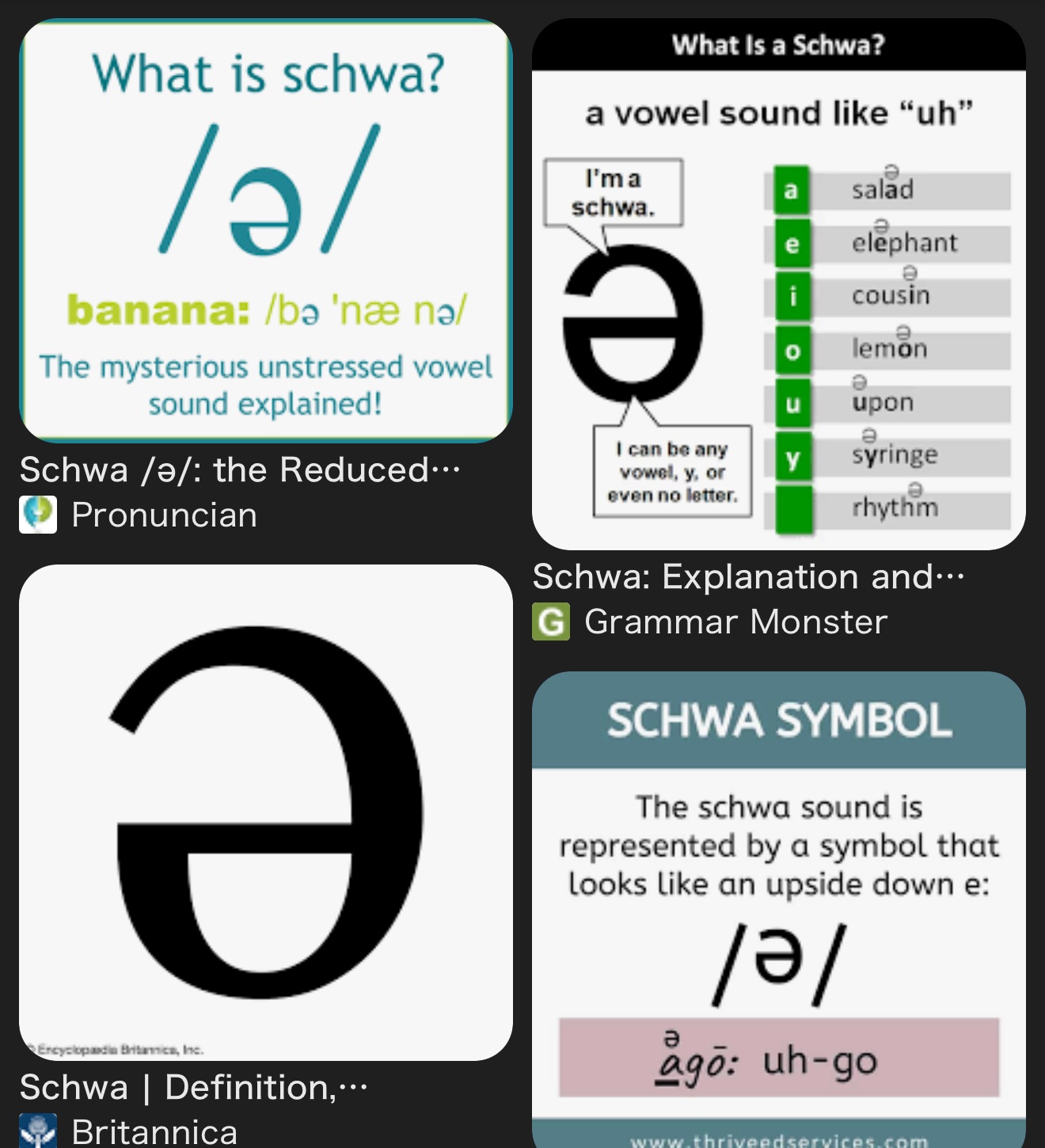
The schwa sound, represented by the symbol /ə/, is the most common vowel sound in the English language. It’s a relaxed, unstressed sound, like a very short “uh.”
Where to Find It
You’ll find the schwa in unstressed syllables of words. It’s never found in a syllable that is emphasized or has a strong stress.
For example, look at the word “about”:
The stress is on the second syllable: /ə-baʊt/
The first syllable, “a,” is unstressed and sounds like “uh.”
You can also find the schwa in these words:
“sofa”: /ˈsoʊ-fə/ (The “a” at the end is a schwa.)
“banana”: /bə-ˈnæn-ə/ (The first “a” and the last “a” are both schwas.)
“family”: /ˈfæm-ə-li/ (The “i” in the middle is a schwa.)
The schwa sound can be represented by any vowel letter (a, e, i, o, u) or even a combination of vowels. It’s all about the sound, not the spelling.
Why is it so Important?
Mastering the schwa sound is key to speaking English with a more natural rhythm and flow. When native speakers talk, they don’t give equal stress to every syllable. They shorten and de-emphasize unstressed syllables, and the schwa is the sound they use to do this.
Without the schwa, words would sound choppy and unnatural. For instance, if you pronounced “banana” as /bæ-ˈnæ-næ/, it would sound very different from the natural /bə-ˈnæn-ə/.
To practice, try saying words with more than one syllable and identify the unstressed vowels. Focus on relaxing your mouth and making a soft, short “uh” sound. The more you practice, the more natural your pronunciation will become.
–
単語 / 熟語 発音記号 意味
schwa /ʃwɑː/ シュワ音(英語で最も一般的な母音)
sound /saʊnd/ 音
represented by /ˌreprɪˈzentɪd baɪ/ ~によって表される
symbol /ˈsɪmbəl/ 記号、シンボル
common /ˈkɑːmən/ 一般的な
vowel /ˈvaʊəl/ 母音
relaxed /rɪˈlækst/ 力の抜けた、リラックスした
unstressed /ʌnˈstrest/ 強勢のない、アクセントのない
syllable /ˈsɪləbəl/ 音節
emphasized /ˈɛmfəsaɪzd/ 強調された
stress /stres/ 強勢、アクセント
example /ɪɡˈzæmpəl/ 例
about /əˈbaʊt/ ~について
sofa /ˈsoʊfə/ ソファ
banana /bəˈnænə/ バナナ
family /ˈfæməli/ 家族
represented by any vowel /ˌreprɪˈzentɪd baɪ ˈɛni ˈvaʊəl/ 任意の母音で表される
spelling /ˈspɛlɪŋ/ 綴り
natural rhythm and flow /ˈnætʃrəl ˈrɪðəm ænd floʊ/ 自然なリズムと流れ
native speakers /ˈneɪtɪv ˈspiːkərz/ 母語話者
de-emphasize /diˈɛmfəsaɪz/ 強調を弱める
choppy /ˈtʃɑːpi/ 途切れ途切れの、不自然な
pronunciation /prəˌnʌnsiˈeɪʃən/ 発音
practice /ˈpræktɪs/ 練習する
identify /aɪˈdɛntɪfaɪ/ 識別する
unstressed vowels /ʌnˈstrest ˈvaʊəlz/ 強勢のない母音
relax your mouth /rɪˈlæks jʊr maʊθ/ 口をリラックスさせる
soft, short “uh” sound /sɔft ʃɔrt ʌ/ 柔らかく短い「ア」の音
more natural /mɔːr ˈnætʃrəl/ より自然な
シュワ音(/ə/ で表される)は、英語で最も一般的な母音音です。これはリラックスした、無強勢の音で、ごく短い「ア」に似ています。
どこで見つかるか
シュワは単語の無強勢の音節に現れます。強勢が置かれている音節には決して現れません。
例えば「about」という単語を見てみましょう:
強勢は第2音節にあります: /əˈbaʊt/
最初の音節「a」は無強勢で「ア」のように発音されます。
シュワは次のような単語にも見られます:
sofa: /ˈsoʊ-fə/ (最後の「a」がシュワ音)
banana: /bə-ˈnæn-ə/ (最初と最後の「a」がシュワ音)
family: /ˈfæm-ə-li/ (真ん中の「i」がシュワ音)
シュワ音は、母音の「a, e, i, o, u」、または母音の組み合わせでも表されます。重要なのは綴りではなく音です。
なぜ重要なのか?
シュワ音をマスターすることは、英語をより自然なリズムと流れで話すための鍵です。母語話者が話すとき、すべての音節を均等に強調するわけではありません。無強勢の音節を短く弱め、シュワ音を使います。
シュワがなければ、言葉は途切れ途切れで不自然に聞こえてしまいます。例えば「banana」を /bæ-ˈnæ-næ/ のように発音すると、自然な /bə-ˈnæn-ə/ とは大きく異なります。
練習としては、複数音節の単語を言いながら無強勢の母音を見つけてみましょう。口をリラックスさせ、柔らかく短い「ア」の音を意識することです。練習を重ねるほど、発音は自然になっていきます。