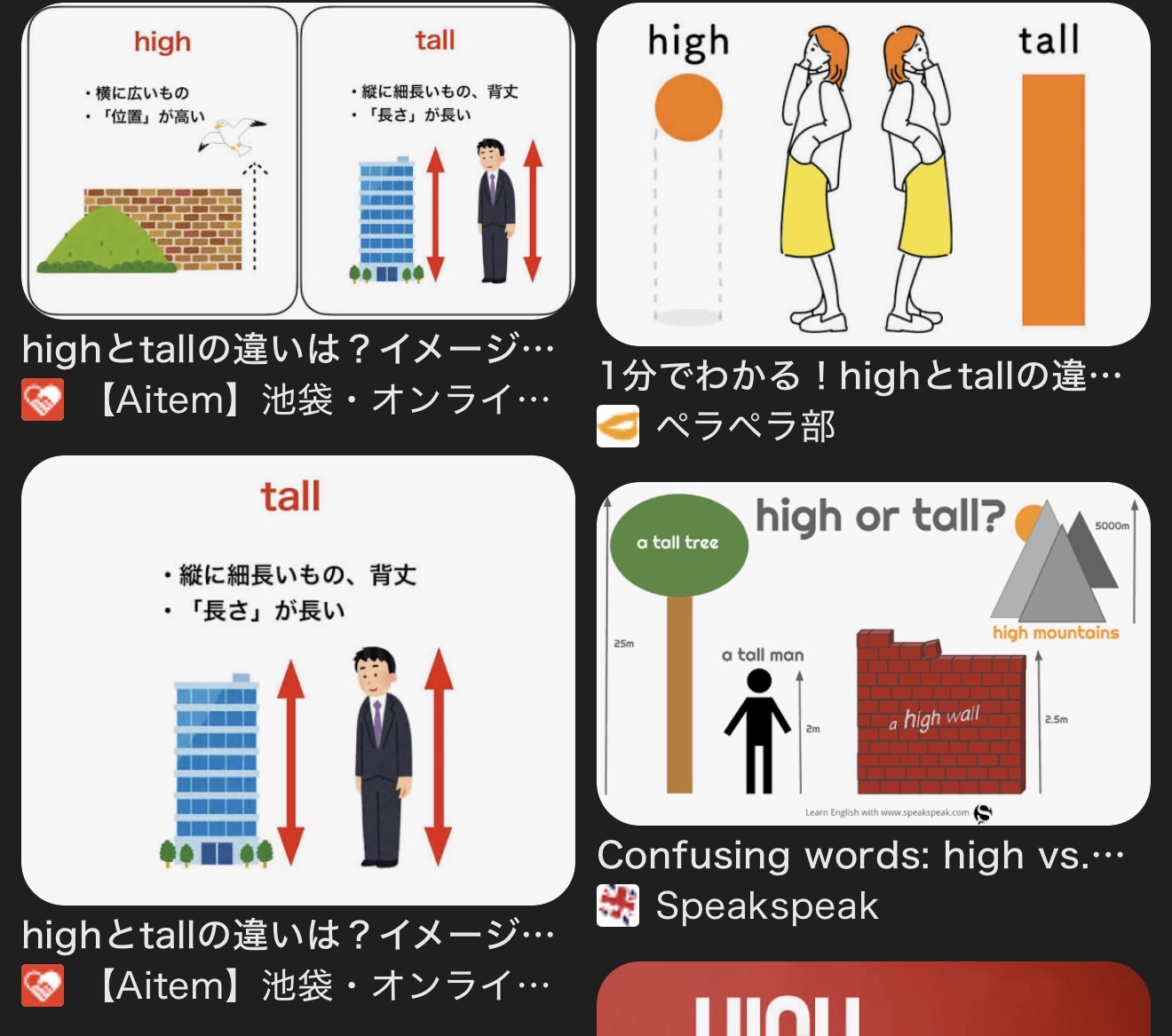
小学生の基礎英語 25/11/7(金) highとtall の違い
The words high and tall both refer to objects or points that are elevated, but they are generally used in English to describe different aspects of height, especially concerning an object’s shape or dimension.
Here is a breakdown of the differences:
Feature, TALL, HIGH
Focus:
Vertical Dimension (Measurement from bottom to top). Distance from the Ground or Elevation.
Shape:
Used for objects that are narrow and long vertically. Used for objects that are wide, broad, or flat, or for abstract concepts.
Common Use:
People, trees, buildings, columns, fences. Mountains, clouds, airplanes, shelves, prices, standards (abstract).
Question:
How tall are you/is it? How high is it (above the ground)?
Example:
“That basketball player is very tall.” “The picture is hung too high on the wall.”
Key Distinctions
1. Dimension and Shape
Tall: Emphasizes the length from the base to the top. It is typically used for things that are much taller than they are wide.
Example:
A tall person, a tall skyscraper, a tall glass.
High: Emphasizes the distance above the ground or some other level. It is used for things that are wide or broad (like a mountain) or when you are describing a location in the air.
Example:
A high shelf, a high altitude, a high wall (often broad).
2. Abstract Use
High is used much more frequently for abstract nouns. High quality, high expectations, high price, high speed.Tall is rarely used for abstract concepts.
When They Overlap
For some fixed structures, especially very large ones like mountains or buildings, either word can sometimes be used, although the nuance changes:
“Mount Fuji is a high mountain.” (Focus on elevation/altitude)
“That is a tall building.” (Focus on vertical length/slenderness)
Here are many example sentences illustrating the difference and proper usage of high and tall.
Examples Using TALL (Focus on Vertical Height /Length)
Used for things that are relatively narrow compared to their height (e.g., people, trees, buildings, structures):
My brother is very tall, standing over six feet.
The city is building a new tall apartment tower downtown.
The redwood tree is one of the tallest species in the world.
She wore a pair of stylish, tall black boots.
He put up a tall wooden fence to keep out the deer.
The giraffe has a tall neck, allowing it to reach leaves.
How tall is the Eiffel Tower? (Asking for its length from the ground up.)
The waiter brought us two tall glasses of iced tea.
He’s the tallest person in our class this year.
-Examples Using HIGH (Focus on Elevation/Distance from the Ground)
Used for elevation, broad objects, points in the air, or abstract concepts:
The clouds were sailing high in the sky this morning.
The hawk was flying at a very high altitude.
We climbed the mountain to reach the highest point.
The shelf is too high for the children to reach.
The water level in the river is unusually high this season.
He aims to achieve a high score on the entrance exam. (Abstract)
The stock market reached a new high this week. (Abstract)
They have a high standard for customer service. (Abstract)
The ball was hit too high, clearing the stadium roof.
Examples Using BOTH (Nuance Change)
Used when either is possible, but the meaning shifts:
The wall around the castle was very tall. (Focus on the wall’s vertical dimension/length.)
The satellite dish was mounted too high on the wall. (Focus on its position relative to the ground/floor.)
That building is so tall it scrapes the clouds. (Focus on its massive vertical length.)
The plane was flying so high we couldn’t see it clearly. (Focus on its elevation/altitude.)
They set the bar too high for the junior employees. (Abstract: High standards.)
Could you grab that tall vase? (Focus on the object’s length/shape.)
–
単語/熟語 発音記号 意味
high /haɪ/ 高い、(位置・程度が)高い
tall /tɔːl/ 背が高い、縦に長い
refer to /rɪˈfɜːr tuː/ ~を指す、言及する
elevated /ˈɛləˌveɪtɪd/ 高い位置にある、高められた
describe /dɪˈskraɪb/ 説明する、描写する
aspect /ˈæspɛkt/ 側面、観点
height /haɪt/ 高さ
concerning /kənˈsɜːrnɪŋ/ ~に関して
breakdown /ˈbreɪkˌdaʊn/ 分析、内訳
difference /ˈdɪfrəns/ 違い
vertical dimension /ˈvɜːrtɪkəl dɪˈmɛnʃən/ 垂直方向の寸法
elevation /ˌɛləˈveɪʃən/ 高さ、高度
narrow /ˈnæroʊ/ 狭い、細い
broad /brɔːd/ 広い、幅のある
flat /flæt/ 平らな
abstract concept /ˈæbstrækt ˈkɒnsɛpt/ 抽象的概念
column /ˈkɑːləm/ 柱、コラム
fence /fɛns/ 柵、フェンス
mountain /ˈmaʊntən/ 山
shelf /ʃɛlf/ 棚
price /praɪs/ 価格
standard /ˈstændərd/ 水準、基準
emphasize /ˈɛmfəˌsaɪz/ 強調する
altitude /ˈæltɪˌtuːd/ 高度
sufficient /səˈfɪʃənt/ 十分な
location /loʊˈkeɪʃən/ 位置、場所
quality /ˈkwɒləti/ 質、品質
expectation /ˌɛkspɛkˈteɪʃən/ 期待
overlap /ˈoʊvərlæp/ 重なる、共通点がある
nuance /ˈnjuːɑːns/ ニュアンス、微妙な違い
skyscraper /ˈskaɪˌskreɪpər/ 高層ビル
redwood /ˈrɛdˌwʊd/ セコイア(樹種)
species /ˈspiːʃiːz/ 種類、種
stylish /ˈstaɪlɪʃ/ おしゃれな
fence /fɛns/ 柵
giraffe /dʒɪˈræf/ キリン
iced tea /aɪst tiː/ アイスティー
elevation /ˌɛləˈveɪʃən/ 高さ、標高
altitude /ˈæltɪˌtuːd/ 高度
highest point /ˈhaɪəst pɔɪnt/ 最高点
unusually /ʌnˈjuːʒuəli/ 異常に
aim to /eɪm tuː/ ~を目指す
achieve /əˈtʃiːv/ 達成する
score /skɔːr/ 得点
standard /ˈstændərd/ 基準
perception /pərˈsɛpʃən/ 認識、見方
unmotivated /ʌnˈmoʊtɪˌveɪtɪd/ 意欲のない
diligent /ˈdɪlɪdʒənt/ 勤勉な
remarkable /rɪˈmɑːrkəbl/ 著しい、目立った
recession /rɪˈsɛʃən/ 不況、景気後退
minimum wage /ˈmɪnɪməm weɪdʒ/ 最低賃金
headline /ˈhɛdˌlaɪn/ 見出し、ニュース記事
talented /ˈtæləntɪd/ 才能のある
diligent and honest /ˈdɪlɪdʒənt ənd ˈɒnɪst/ 勤勉で誠実な
at a high altitude /æt ə haɪ ˈæltɪtuːd/ 高高度で
high standard /haɪ ˈstændərd/ 高い基準
tall building /tɔːl ˈbɪldɪŋ/ 高い建物
high mountain /haɪ ˈmaʊntən/ 高い山
tall glass /tɔːl ɡlæs/ 背の高いグラス
high shelf /haɪ ʃɛlf/ 高い位置の棚
単語 high と tall はどちらも「高い」ものや点を指しますが、
英語では一般的に「高さの異なる側面」を表すために使い分けられます。
特に、物体の「形」や「寸法」に関して違いがあります。
🔹違いのまとめ
特徴 TALL(背が高い) HIGH(位置が高い)
焦点 垂直方向の長さ(下から上までの測定) 地面からの距離、または高度
形状 細長く縦に長いもの 幅広く平らなもの、または抽象概念
よく使われる対象 人、木、建物、柱、フェンス 山、雲、飛行機、棚、価格、基準など
🔹主要な違い
寸法と形状
Tall:下から上までの長さを強調。縦に長いものに使う。
例)A tall person, a tall skyscraper, a tall glass
High:地面や基準からの「高さ」を強調。広いものや位置に使う。
例)A high shelf, a high altitude, a high wall
抽象的な用法
High は抽象名詞によく使う。例:high quality, high price
Tall は抽象的な概念にはほとんど使わない。
🔹両方使える場合のニュアンスの違い
Mount Fuji is a high mountain. → 高度・標高を強調。
That is a tall building. → 建物の縦の長さを強調。
🏁まとめ
tall → 「縦に長いもの」
high → 「位置・標高・程度が高いもの」
この違いを意識すると、自然な英語表現ができます。
投稿者プロフィール