ニュースで学ぶ現代英語 26/2/10(火)予習-インドネシアの洞窟壁画 世界最古か
https://www3.nhk.or.jp/nhkworld/en/news/20260122_17/
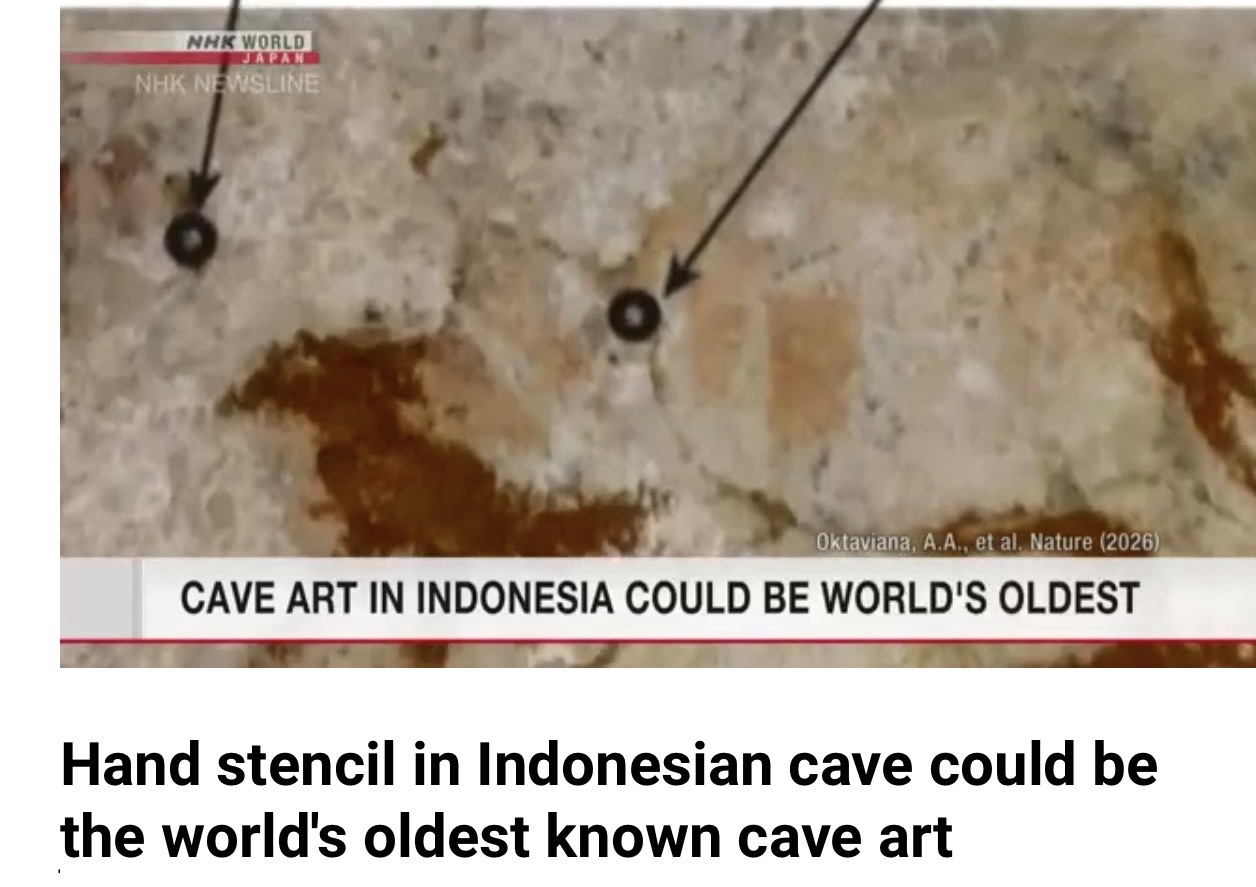
Hand stencil in Indonesian cave could be the world’s oldest known cave art
Thursday, Jan. 22, 18:44
A research group says that a human handprint found on a cave wall in Indonesia could be the world’s oldest known cave art, created at least 67,800 years ago.
The researchers from Indonesia and Griffith University in Australia published their findings in the British science journal Nature on Wednesday.
The handprint was discovered inside a cave on the island of Muna, a small island near the much larger island of Sulawesi, during a project that began in 2019.
The researchers say the handprint is a stencil, made by blowing pigment over a hand placed against the wall.
By analyzing deposits that gradually formed on top of the pigment, the researchers determined that the image predates a hand stencil found in Spain by more than 1,000 years. The image in Spain had previously been considered the oldest.
The researchers say that the reddish-colored stencil embodies an early achievement of human creativity and provides a clue as to how human artistic activity spread across the globe.
–
単語・熟語 発音記号 意味
hand stencil hænd ˈstensl 手形のステンシル画
cave art keɪv ɑːrt 洞窟壁画
world’s oldest known wɜːrldz ˈoʊldəst noʊn 世界最古と知られている
research group rɪˈsɜːrtʃ ɡruːp 研究グループ
handprint ˈhændprɪnt 手形
cave wall keɪv wɔːl 洞窟の壁
at least æt liːst 少なくとも
researcher rɪˈsɜːrtʃər 研究者
publish ˈpʌblɪʃ 公表する
findings ˈfaɪndɪŋz 研究結果
science journal ˈsaɪəns ˈdʒɜːrnl 科学雑誌
discover dɪˈskʌvər 発見する
inside ɪnˈsaɪd ~の内部に
island ˈaɪlənd 島
project ˈprɑːdʒekt 研究計画
stencil ˈstensl 型紙絵、ステンシル
blow bloʊ 吹き付ける
pigment ˈpɪɡmənt 顔料
place A against B pleɪs əˈɡenst AをBに押し当てる
analyze ˈænəlaɪz 分析する
deposit dɪˈpɑːzɪt 堆積物
gradually ˈɡrædʒuəli 徐々に
determine dɪˈtɜːrmɪn 判断する
predate priːˈdeɪt ~より古い
previously ˈpriːviəsli 以前は
consider kənˈsɪdər ~と考える
reddish-colored ˈredɪʃ ˈkʌlərd 赤みがかった
embody ɪmˈbɑːdi 体現する
achievement əˈtʃiːvmənt 達成、成果
creativity ˌkriːeɪˈtɪvɪti 創造性
provide a clue prəˈvaɪd ə kluː 手がかりを与える
artistic activity ɑːrˈtɪstɪk ækˈtɪvɪti 芸術活動
spread across spred əˈkrɔːs ~全体に広がる
globe ɡloʊb 地球、世界
インドネシアの洞窟で見つかった手形は、世界最古の洞窟壁画かもしれない
研究グループは、インドネシアの洞窟の壁で発見された人間の手形が、少なくとも6万7,800年前に制作された、世界最古と知られる洞窟壁画である可能性があると発表した。
インドネシアおよびオーストラリアのグリフィス大学の研究者らは、その研究結果を水曜日に英国の科学誌『ネイチャー』に発表した。
その手形は、2019年に始まった調査プロジェクトの一環として、スラウェシ島という大きな島の近くにある小さなムナ島の洞窟内部で発見された。
研究者によると、その手形はステンシルであり、壁に手を当て、その上から顔料を吹き付けて作られたものだという。
顔料の上に徐々に形成された堆積物を分析することで、研究者たちは、この画像がスペインで発見された手形のステンシルよりも1,000年以上古いことを突き止めた。スペインのものは、それまで最古と考えられていた。
研究者たちは、この赤みがかったステンシルは人類の創造性における初期の成果を体現しており、人類の芸術活動がどのように世界中に広がっていったのかを示す手がかりを与えるものだと述べている。
-語彙クイズ(10問)
Q1. “hand stencil” とは何か?
A. 手袋
B. 手形の絵
C. 彫刻
D. 写真
Q2. “at least” の意味は?
A. 正確に
B. せいぜい
C. 少なくとも
D. おそらく
Q3. “publish findings” の意味として正しいものは?
A. 研究を中止する
B. 研究結果を公表する
C. 研究資金を集める
D. 研究を複製する
Q4. “discover” の意味は?
A. 隠す
B. 発見する
C. 破壊する
D. 修復する
Q5. “pigment” とは何か?
A. 水
B. 岩
C. 顔料
D. 骨
Q6. “analyze” に最も近い意味は?
A. 分解する
B. 分析する
C. 描写する
D. 推測する
Q7. “predate” の意味は?
A. 同時代である
B. 後に作られる
C. ~より古い
D. ~に影響される
Q8. “previously” の意味は?
A. その後
B. 現在
C. 以前は
D. たまに
Q9. “embody” の意味は?
A. 隠す
B. 体現する
C. 批判する
D. 記録する
Q10. “spread across the globe” は何を表す?
A. 島に限定される
B. 世界中に広がる
C. 消滅する
D. 局地的に残る
-TOEIC形式問題(5問)
Q1. The handprint was found on a cave wall in _____.
A. Spain
B. Australia
C. Indonesia
D. Africa
Q2. The researchers published their findings in _____.
A. a newspaper
B. a history book
C. a science journal
D. a government report
Q3. How was the hand stencil created?
A. By carving stone
B. By painting with a brush
C. By blowing pigment over a hand
D. By pressing clay
Q4. The image in Spain was previously considered _____.
A. the newest
B. the most colorful
C. the oldest
D. the smallest
Q5. What does the hand stencil suggest about humans?
A. They avoided art
B. They lacked creativity
C. They had early artistic ability
D. They lived only in Europe
-読解問題(3問・英語)
Q1. Why is the hand stencil in Indonesia considered important?
Q2. How did researchers determine the age of the handprint?
Q3. What does the stencil reveal about early human behavior?
...
投稿者プロフィール