ニュースで学ぶ現代英語 26/2/3(火)予習2-中国 4年連続で人口減少
関連記事
https://abcmedia.am/en/news/226958/
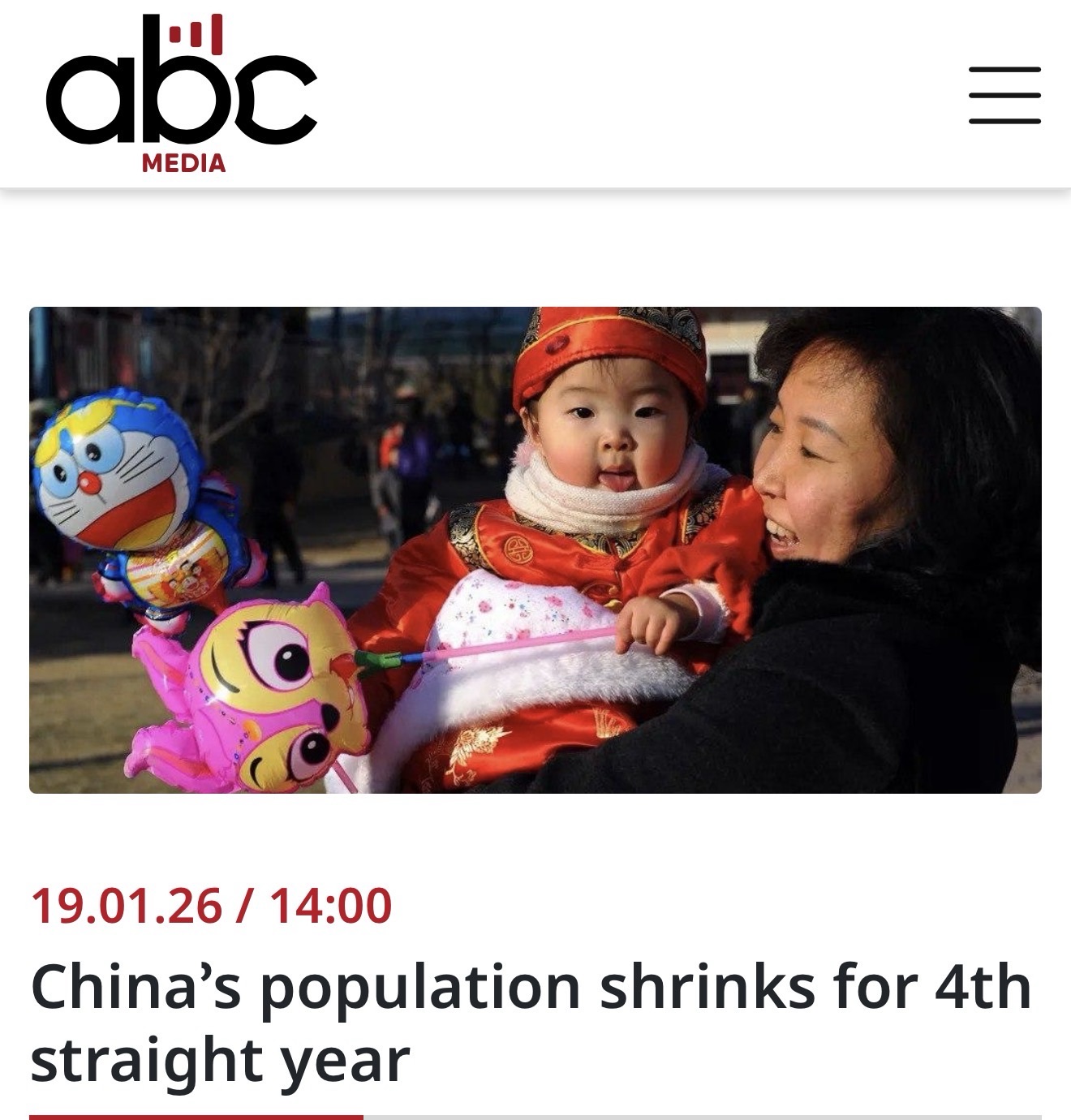
China’s population shrinks for 4th straight year
China’s population fell for the fourth year in a row in 2025, the BBC reports.
The country’s birth rate has dropped to a record low, despite a series of government measures aimed at addressing the problem.
It is noted that births have dropped to their lowest level since the Communist Party came to power in 1949, while the mortality rate has increased.
Its population fell 3.39 million to reach 1.4 billion by the end of 2025, marking a quicker decline than the previous year.
Its birth rate fell to 5.63 per 1,000 people – a record low since the Communist Party took power in 1949 – while its death rate rose to 8.04 per 1,000 people, the highest since 1968.
Faced with an aging population and sluggish economy, Beijing has been trying hard to encourage more young people to marry and have children.
In 2016, it scrapped its longstanding one-child policy and replaced it with a two-child limit. When that did not lead to a sustained upsurge in births, authorities announced that they would allow up to three children per couple in 2021.
More recently, China has offered parents 3,600 yuan (£375; $500) per each of their children under the age of three. Certain provinces are also dishing out their own baby bonuses, including additional payouts and extended maternity leave.
China has one of the lowest fertility rates in the world, at around one birth per woman, below the replacement rate of 2.1. Other economies in the region, such as South Korea, Singapore and Taiwan, have similarly low fertility rates.
China is also one of the most expensive countries in which to raise a child, according to a 2024 report by the YuWa Population Research Institute in Beijing.
A shrinking population has economic and social implications for the world’s second-largest economy: exacerbating an already declining workforce and weak consumer sentiment.
With many young people moving away from their parents, there is also a growing number of seniors who are being left to look after themselves or rely on government payments.
But the pension pot is running dry, according to the state-run Chinese Academy of Social Sciences – and the country is running out of time to build enough funds to care for its growing elderly population.
You can read the full article at this address: https://abcmedia.am/en/news/226958/
ABC MEDIA © 2026. All rights reserved
単語・熟語 発音記号 意味
shrink /ʃrɪŋk/ 縮小する、減少する
for the fourth year in a row /fɔːrθ jɪr ɪn ə roʊ/ 4年連続で
birth rate /ˈbɜːrθ reɪt/ 出生率
drop to /drɑːp tuː/ ~まで低下する
record low /ˈrɛkərd loʊ/ 過去最低
despite /dɪˈspaɪt/ ~にもかかわらず
a series of /ə ˈsɪriːz əv/ 一連の
government measures /ˈɡʌvərnmənt ˈmɛʒərz/ 政府の対策
aim at ~ /eɪm æt/ ~を目的とする
address (a problem) /əˈdrɛs/ 問題に対処する
It is noted that ~ /ɪt ɪz ˈnoʊtɪd/ ~と指摘されている
mortality rate /mɔːrˈtælɪti reɪt/ 死亡率
come to power /kʌm tuː ˈpaʊər/ 政権を握る
by the end of /baɪ ði ɛnd əv/ ~の終わりまでに
mark (v.) /mɑːrk/ 示す、記録する
quicker decline /ˈkwɪkər dɪˈklaɪn/ より速い減少
per 1,000 people /pər θaʊzənd/ 人口1,000人当たり
take power /teɪk ˈpaʊər/ 政権を握る
rise to /raɪz tuː/ ~まで上昇する
faced with /feɪst wɪð/ ~に直面して
aging population /ˈeɪdʒɪŋ ˌpɑːpjəˈleɪʃən/ 高齢化する人口
sluggish economy /ˈslʌɡɪʃ ɪˈkɑːnəmi/ 低迷する経済
encourage /ɪnˈkɜːrɪdʒ/ 促す
scrap (a policy) /skræp/ (政策を)廃止する
longstanding /ˈlɔːŋˌstændɪŋ/ 長年続いた
one-child policy /ˈwʌn tʃaɪld ˈpɑːləsi/ 一人っ子政策
replace A with B /rɪˈpleɪs/ AをBに置き換える
sustained /səˈsteɪnd/ 持続的な
upsurge /ˈʌpsɜːrdʒ/ 急増
authority /əˈθɔːrɪti/ 当局
allow up to /əˈlaʊ ʌp tuː/ 最大~まで許可する
under the age of /ˈʌndər ði eɪdʒ əv/ ~歳未満の
dish out /dɪʃ aʊt/ (金などを)支給する
baby bonus /ˈbeɪbi ˈboʊnəs/ 出産手当
payout /ˈpeɪaʊt/ 支給金
extended maternity leave /ɪkˈstɛndɪd məˈtɜːrnɪti liːv/ 延長された産休
fertility rate /fərˈtɪləti reɪt/ 合計特殊出生率
replacement rate /rɪˈpleɪsmənt reɪt/ 人口維持水準
raise a child /reɪz ə tʃaɪld/ 子どもを育てる
shrinking population /ˈʃrɪŋkɪŋ ˌpɑːpjəˈleɪʃən/ 人口減少
implication /ˌɪmplɪˈkeɪʃən/ 影響、含意
exacerbate /ɪɡˈzæsərbeɪt/ 悪化させる
workforce /ˈwɜːrkfɔːrs/ 労働力
consumer sentiment /kənˈsuːmər ˈsɛntɪmənt/ 消費者心理
rely on /rɪˈlaɪ ɑːn/ ~に頼る
pension pot /ˈpɛnʃən pɑːt/ 年金財源
run dry /rʌn draɪ/ 枯渇する
run out of time /rʌn aʊt əv taɪm/ 時間がなくなる
elderly population /ˈɛldərli ˌpɑːpjəˈleɪʃən/ 高齢者人口
中国の人口、4年連続で減少
BBCによると、中国の人口は2025年に4年連続で減少した。
政府が問題解決を目的とした一連の対策を講じているにもかかわらず、出生率は過去最低に落ち込んでいる。
出生数は、共産党が1949年に政権を握って以来、最も低い水準に落ちた一方で、死亡率は上昇したと指摘されている。
人口は2025年末までに339万人減少し、14億人となり、前年よりも速いペースでの減少を記録した。
出生率は人口1,000人当たり5.63人と、1949年以来の最低水準となった。一方、死亡率は8.04人に上昇し、1968年以来の最高となった。
高齢化と低迷する経済に直面する中、北京政府は若者に結婚や出産を促そうと懸命に取り組んでいる。
2016年、中国は長年続いた一人っ子政策を廃止し、二人まで認める制度に切り替えた。しかし出生数の持続的な増加にはつながらず、2021年には1組の夫婦につき最大3人まで認めると発表した。
最近では、中国は3歳未満の子ども1人につき3,600元(約500ドル)を親に支給している。いくつかの省では、追加給付や産休延長を含む独自の出産手当も実施している。
中国の出生率は女性1人当たり約1人と、人口維持に必要な2.1を下回り、世界でも最低水準の一つだ。韓国、シンガポール、台湾など周辺地域の経済も同様に低い出生率となっている。
北京の人口研究機関による2024年の報告では、中国は子どもを育てる費用が最も高い国の一つでもある。
人口減少は、世界第2位の経済大国である中国にとって、労働力の減少や弱い消費者心理をさらに悪化させるなど、経済的・社会的な影響をもたらしている。
多くの若者が親元を離れる中、自立するか政府の支援に頼らざるを得ない高齢者も増えている。
しかし、国の年金財源は枯渇しつつあり、高齢者人口の増加に備えるための資金を確保する時間は残されていないと、国営研究機関は警告している。
投稿者プロフィール