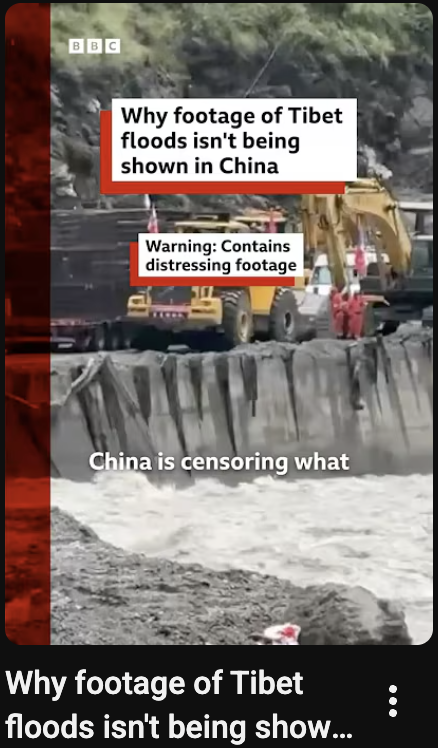
Why footage of Tibet floods isn’t …
China is censoring what its people get to know and get to see about the landslide in Tibet.
This dramatic footage of a wall of water crashing through the border port between Nepal and Tibet has been seen on screens around the world, but not here in China.
And that is partly because of where this disaster took place. Tibet, which was annexed by China in the 1950s, has in the past resisted Communist Party rule. There have even been violent protests. Beijing will fear instability in this politically sensitive region. It restricts access to foreigners and particularly the foreign press. We cannot go.
And that is why orders are coming from the very top, from Xi Jinping himself.
What we have seen is this kind of footage of the first rescuers reaching the worst hit area of Tibet. We’ve also seen the extraordinary measures they’ve had to take to get there. But all the information we get is from Chinese state media, and it, too, is carefully controlled.
Summary
China is strictly censoring information and footage regarding a severe landslide and flooding along the Tibet-Nepal border. Due to the political sensitivity and history of unrest in Tibet, the Chinese government—under direct directives from Xi Jinping—bars foreign media access and tightly controls all news and rescue footage released through state-run media to prevent regional instability.
-単語 発音記号 意味
censor /ˈsensər/ 検閲する
landslide /ˈlændslaɪd/ 土砂崩れ、地滑り
footage /ˈfʊtɪdʒ/ 映像、撮影された映像
dramatic /drəˈmætɪk/ 劇的な、衝撃的な
crash /kræʃ/ 激しく突入する、衝突する
border /ˈbɔːrdər/ 国境、境界
port /pɔːrt/ 港、出入国港
disaster /dɪˈzæstər/ 災害、惨事
partly /ˈpɑːrtli/ 部分的に、一部には
annex /əˈneks/ 併合する
resist /rɪˈzɪst/ 抵抗する
Communist /ˈkɑːmjənɪst/ 共産主義の、共産主義者
violent /ˈvaɪələnt/ 暴力的な
protest /ˈproʊtest/ 抗議、抗議活動
instability /ˌɪnstəˈbɪləti/ 不安定、不安定状態
politically /pəˈlɪtɪkli/ 政治的に
sensitive /ˈsensətɪv/ 敏感な、微妙な
restrict /rɪˈstrɪkt/ 制限する
access /ˈækses/ 接近、立ち入り、利用する権利
foreigner /ˈfɔːrənər/ 外国人
particularly /pərˈtɪkjələrli/ 特に
press /pres/ 報道機関、報道陣
order /ˈɔːrdər/ 命令、指示
rescuer /ˈreskjuːər/ 救助隊員、救助者
extraordinary /ɪkˈstrɔːrdəneri/ 並外れた、異例の
measure /ˈmeʒər/ 措置、対策
state media /steɪt ˈmiːdiə/ 国営メディア
carefully /ˈkerfəli/ 注意深く、慎重に
control /kənˈtroʊl/ 管理する、統制する
severe /sɪˈvɪr/ 深刻な、激しい
flooding /ˈflʌdɪŋ/ 洪水、浸水
regarding /rɪˈɡɑːrdɪŋ/ ~に関して
directive /dəˈrektɪv/ 指示、指令
bar /bɑːr/ 禁止する、締め出す
tightly /ˈtaɪtli/ 厳しく、しっかりと
release /rɪˈliːs/ 公開する、発表する
-熟語・重要表現 英語 意味
censor information 情報を検閲する
get to know ~ ~を知ることができる
get to see ~ ~を見ることができる
get to know and get to see 知ったり見たりすることができる
a wall of water 壁のように押し寄せる大量の水
crash through ~ ~を激しく突き抜ける
around the world 世界中で
take place 起こる、行われる
be annexed by ~ ~によって併合される
resist ~ rule ~の統治に抵抗する
Communist Party rule 共産党による統治
violent protests 暴力的な抗議活動
fear instability 不安定化を恐れる
politically sensitive region 政治的に敏感な地域
restrict access to ~ ~への立ち入り・アクセスを制限する
the foreign press 外国の報道機関/外国メディア
come from the very top 最高指導部から出される
from Xi Jinping himself 習近平本人から
reach the worst-hit area 最も被害の大きかった地域に到達する
take measures 措置を講じる、対策を取る
get there そこにたどり着く
all the information we get 私たちが得られるすべての情報
be carefully controlled 厳しく管理・統制されている
bars ~ access ~の立ち入り・アクセスを禁止する
state-run media 国営メディア
prevent instability 不安定化を防ぐ
-特に重要な表現
1. get to know / get to see
what its people get to know and get to see
ここでの get to + 動詞 は、「~する機会・許可がある」「~することができる」という意味です。
したがって、
what its people get to know and get to see
「中国の人々が知ること、見ることを許されている情報」
lというニュアンスになります。
2. be annexed by ~
Tibet, which was annexed by China in the 1950s
annex = 領土などを併合する
was annexed by China
= 「中国によって併合された」
3. from the very top
orders are coming from the very top
直訳すると「まさに一番上から」ですが、ニュースでは、
「最高指導部から」「政府の最高レベルから」という意味で使われます。
4. the worst-hit area
the worst hit area of Tibet
hit はここでは「被害を受けた」という意味です。
worst-hit area
最も大きな被害を受けた地域
5. be carefully controlled
it, too, is carefully controlled
ここでの it は前の Chinese state media / information の流れを受けています。
「慎重に管理されている」というより、このニュースの文脈では、
「政府によって厳しく統制されている」という意味合いが強いです。
-全文の日本語訳
中国は、チベットで起きた土砂崩れについて、中国国民が何を知り、何を見ることができるのかを検閲しています。
ネパールとチベットの国境にある出入国港を、まるで壁のような大量の水が激しく押し流していく、この衝撃的な映像は世界中の画面で見ることができます。しかし、ここ中国では見ることができません。
そして、その理由の一つは、この災害が起きた場所にあります。
チベットは1950年代に中国によって併合されましたが、これまでにも共産党による統治に抵抗してきました。実際、暴力的な抗議活動が起きたことさえあります。
北京政府は、この政治的に敏感な地域が不安定化することを恐れています。
そのため、外国人、特に外国の報道機関による立ち入りを制限しています。
私たちは現地に行くことができません。
そして、それが、最高レベルから、つまり習近平本人から命令が出されている理由です。
私たちが目にしているのは、チベットで最も大きな被害を受けた地域に、最初の救助隊員たちが到着する際の、このような映像です。
また、彼らがそこへたどり着くために取らなければならなかった、非常に困難で異例の措置についても私たちは見てきました。
しかし、私たちが得られる情報はすべて中国の国営メディアからのものです。そして、その情報自体もまた、政府によって厳しく統制されています。
-Summary の日本語訳
中国は、チベットとネパールの国境付近で発生した深刻な土砂崩れや洪水に関する情報や映像を厳しく検閲しています。
チベットには政治的に敏感な歴史があり、過去には反政府的な混乱も起きているため、中国政府は地域の不安定化を防ごうとしています。
そのため、習近平国家主席から直接指示が出され、外国メディアの現地への立ち入りを禁止するとともに、国営メディアを通じて公開されるニュースや救助活動の映像についても厳しく管理しています。
特にニュース英語として覚えるなら、**「restrict access to ~」「from the very top」「the worst-hit area」「state-run media」「be carefully controlled」**の5つが重要です。
投稿者プロフィール

-
英語の文字起こしをしています。間違い等がありましたら、教えてください!
最近古文書の勉強もしています。英語も日本語も難しいですね。

コメント